
Bartending Drinks 101: Master Mixology Basics Now
- 1.
What Makes bartending drinks 101 the Foundation of Every Great Mixologist?
- 2.
The Top 10 Must-Know bartending drinks 101 Cocktails Every Bartender Should Master
- 3.
Decoding the 2-1-1 Rule in bartending drinks 101: The Golden Ratio of Mixing
- 4.
Wait—What’s the 3-2-1 Drink Rule in bartending drinks 101?
- 5.
The 50% Rule in bartending drinks 101: Why Half Your Drink Should Be Ice (Kinda)
- 6.
Why bartending drinks 101 Isn’t Just About Alcohol—It’s About Theater
- 7.
Common Mistakes Newbies Make in bartending drinks 101 (And How to Avoid ‘Em)
- 8.
Tools of the Trade: What You Actually Need for bartending drinks 101
- 9.
From Home Bar to Pro Bar: Scaling Up Your bartending drinks 101 Skills
- 10.
Regional Twists on Classic bartending drinks 101 Recipes (Because One Size Don’t Fit All)
- 11.
Why bartending drinks 101 Is Your Gateway to a Global Culinary Language
Table of Contents
bartending drinks 101
What Makes bartending drinks 101 the Foundation of Every Great Mixologist?
Ever walked into a bar, watched a bartender flip a shaker like it’s a drum solo, and thought, “Man, I wanna do that—but without spilling $20 worth of gin on my shoes”? Well, welcome to bartending drinks 101, folks—the OG syllabus of liquid artistry. Whether you’re prepping for your first shift behind the stick or just wanna impress your squad at Sunday brunch, mastering bartending drinks 101 is non-negotiable. It’s not just about pouring booze; it’s about balance, rhythm, and knowing when to say “nah” to triple shots of tequila at 2 p.m. (Unless it’s Taco Tuesday. Then all bets are off.)
The Top 10 Must-Know bartending drinks 101 Cocktails Every Bartender Should Master
If you’re serious about bartending drinks 101, you better have these ten classics down pat—like, muscle-memory level. These aren’t just drinks; they’re cultural relics with ice. Here’s the holy grail:
- Old Fashioned
- Martini
- Margarita
- Whiskey Sour
- Daiquiri
- Mojito
- Manhattan
- Cosmopolitan
- Negroni
- Espresso Martini
Each one teaches you something vital about bartending drinks 101—from balancing sweet and sour (Whiskey Sour) to layering bitter and herbal (Negroni). Miss one? You’re basically showing up to a knife fight with a spork. And trust us, your Yelp reviews will feel it.
Decoding the 2-1-1 Rule in bartending drinks 101: The Golden Ratio of Mixing
Yo, ever heard the phrase “2 parts booze, 1 part sweet, 1 part sour”? That’s the 2-1-1 rule in bartending drinks 101, baby! It’s the skeleton key to crafting balanced cocktails without needing a chemistry degree. Think of it like your grandma’s pancake recipe—mess with the ratios, and you’re eating rubber. For example, a classic Daiquiri? 2 oz rum, 1 oz lime juice, 1 oz simple syrup. Boom. Done. This rule keeps your bartending drinks 101 game tight, consistent, and Instagrammable (because nobody posts a sad, watery cocktail).
Wait—What’s the 3-2-1 Drink Rule in bartending drinks 101?
Hold up—didn’t we just do 2-1-1? Yeah, but the 3-2-1 drink rule in bartending drinks 101 is a slightly different beast. It usually applies to spirit-forward stirred drinks: 3 parts base spirit, 2 parts modifier (like vermouth), and 1 part accent (bitters or liqueur). A Manhattan? Roughly 3 oz rye, 2 oz sweet vermouth, 1 dash Angostura. This rule is your secret weapon for looking like a pro while barely breaking a sweat. Plus, it saves you from over-pouring when your tips depend on not giving away free shots. Pro tip: write it on your forearm in Sharpie until it sticks.
The 50% Rule in bartending drinks 101: Why Half Your Drink Should Be Ice (Kinda)
Alright, let’s get frosty. The 50% rule in bartending drinks 101 ain’t about alcohol content—it’s about dilution. When you shake or stir a drink, you’re not just mixing; you’re chilling and watering it down just enough to mellow the heat. Aim for ~50% of your final drink volume to come from melted ice. Sounds wild, but that’s what turns a harsh shot of gin into a silky Martini. Skip this, and your bartending drinks 101 efforts taste like regret in a coupe glass. Also, nobody likes a lukewarm Negroni—unless they’re into punishment.
Why bartending drinks 101 Isn’t Just About Alcohol—It’s About Theater
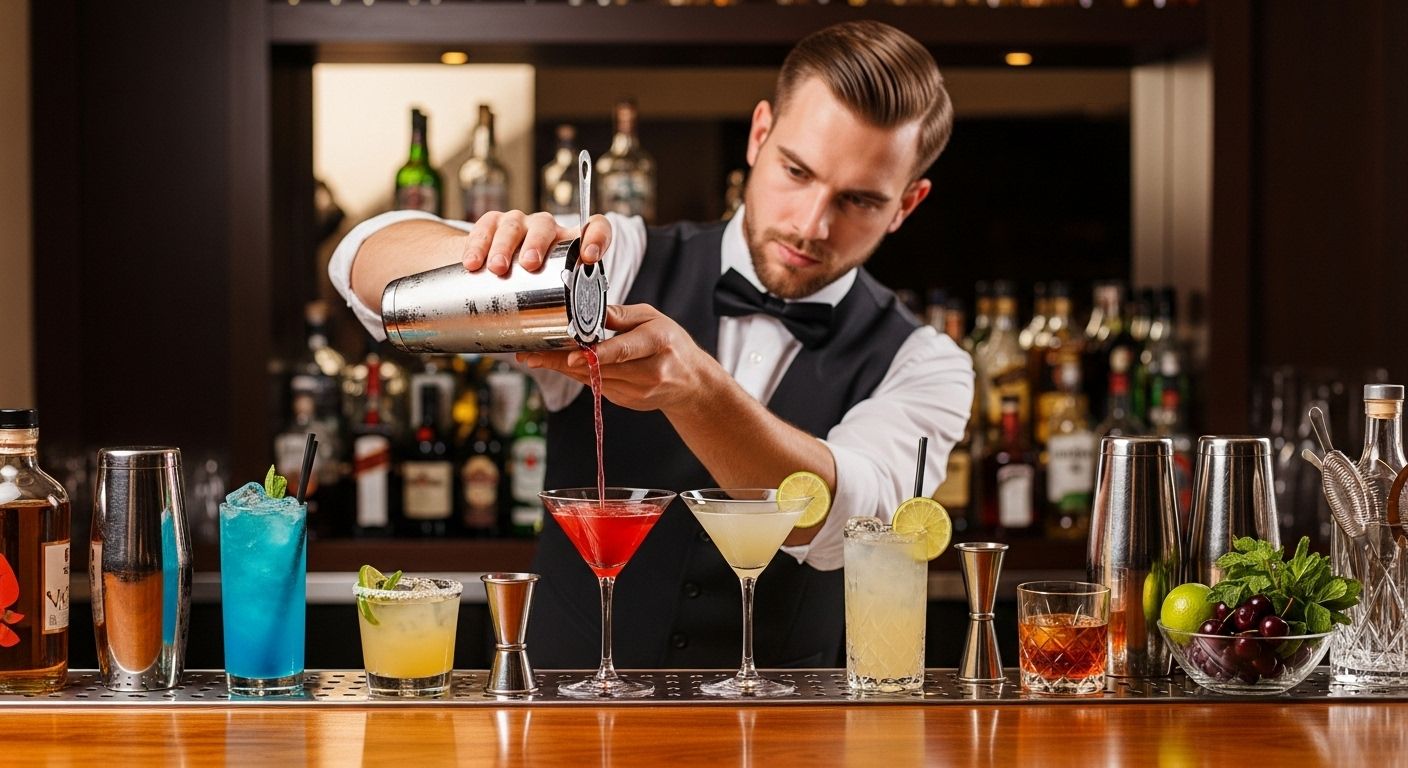
Let’s be real: half of bartending drinks 101 is performance. The clink of ice, the citrus twist flick, the confident pour—it’s Broadway behind the bar. Guests don’t just taste your drink; they experience it. That’s why mastering the basics of bartending drinks 101 includes flair, eye contact, and knowing when to shut up and let the cocktail speak. As they say in Brooklyn: “If your Old Fashioned don’t got presence, it ain’t got no business bein’ on the menu.”
Common Mistakes Newbies Make in bartending drinks 101 (And How to Avoid ‘Em)
Look, we’ve all been there—over-shaking a Martini into a watery mess, using flat tonic, or confusing triple sec with Cointreau (close, but nah). The biggest rookie error in bartending drinks 101? Skipping the fundamentals to chase fancy. You can’t build a skyscraper on sand, and you can’t make a proper Whiskey Sour without fresh lemon juice. Also, please—for the love of god—chill your glassware. Warm cocktails are a crime against humanity, and your Yelp reviews will reflect that. Stick to the script of bartending drinks 101, and you’ll earn respect faster than you can say “last call.”
Tools of the Trade: What You Actually Need for bartending drinks 101
You don’t need a $300 Japanese jigger to start bartending drinks 101—but you do need the basics. Here’s your starter pack:
- Cobbler shaker or Boston shaker
- Hawthorne strainer
- Jigger (dual-sided: 1 oz / 0.5 oz)
- Bar spoon
- Muddler
- Citrus peeler or channel knife
- Ice mold (big cubes = slower melt = happier guests)
Without these, your bartending drinks 101 journey is like cooking pasta without a pot—possible, but deeply sad. And remember: clean tools = clean drinks. Nobody wants a Negroni that tastes like last night’s beer backwash.
From Home Bar to Pro Bar: Scaling Up Your bartending drinks 101 Skills
So you’ve nailed your Margarita and your neighbors keep “accidentally” showing up during happy hour. Congrats—you’re ready to level up your bartending drinks 101 game. But going pro means consistency, speed, and inventory control. That $12 cocktail? It better cost you under $4 in product, or you’re burning cash faster than a TikTok trend. Also, learn to batch cocktails for busy nights—your future self (and your feet) will thank you. And hey, if you’re serious, check out our deep dive onit’s like bartending drinks 101 meets Navy SEAL training.
Regional Twists on Classic bartending drinks 101 Recipes (Because One Size Don’t Fit All)
Here’s the tea: bartending drinks 101 isn’t rigid—it’s a launchpad. In Texas, they swap bourbon for mezcal in an Old Fashioned. In Bali? Lemongrass syrup in a Daiquiri. Even in Queens, you’ll find a “Dirty South” Martini with pickle brine (don’t knock it ‘til you try it). The beauty of bartending drinks 101 is that once you know the rules, you get to break ‘em—thoughtfully. Just don’t go adding coconut water to a Manhattan unless you wanna start a bar fight. Some traditions are sacred, y’know?
Why bartending drinks 101 Is Your Gateway to a Global Culinary Language
At its core, bartending drinks 101 is about connection. A well-made cocktail transcends language—whether you’re in Tokyo, Berlin, or Bushwick. It’s chemistry, culture, and care in a glass. And in a world that feels increasingly fragmented, that’s kinda magical. Plus, knowing your bartending drinks 101 means you’ll never be stranded at a party without a contribution. (Pro move: bring your own bitters. Instant legend.
For more tips and tricks, swing by our Auction House NYC homepage or dive into the full Bartending category. And if you’re planning a private gig, don’t miss our guide on Bartender Private Party Pro Mix Service.
Frequently Asked Questions
What are the top 10 drinks a bartender should know?
The top 10 drinks every bartender must master as part of bartending drinks 101 include the Old Fashioned, Martini, Margarita, Whiskey Sour, Daiquiri, Mojito, Manhattan, Cosmopolitan, Negroni, and Espresso Martini. These classics form the backbone of any serious bar program and teach essential techniques like shaking, stirring, balancing flavors, and proper garnishing—all core to bartending drinks 101.
What is the 2 1 1 rule in bartending?
The 2-1-1 rule in bartending drinks 101 refers to the standard mixing ratio: 2 parts base spirit, 1 part sweet component (like simple syrup), and 1 part sour element (typically citrus juice). This golden formula ensures balance in shaken cocktails like the Daiquiri or Whiskey Sour and is a foundational principle of bartending drinks 101 for achieving consistent, crowd-pleasing results.
What is the 3 2 1 drink rule?
The 3-2-1 drink rule in bartending drinks 101 applies mainly to stirred, spirit-forward cocktails. It stands for 3 parts base spirit (e.g., whiskey), 2 parts fortified wine or modifier (like sweet vermouth), and 1 part accent (such as bitters or amaro). This ratio is key to drinks like the Manhattan and is an advanced but essential concept within bartending drinks 101 for crafting depth and complexity without overwhelming the palate.
What is the 50% rule in bartending?
The 50% rule in bartending drinks 101 emphasizes proper dilution: approximately half of your finished cocktail’s volume should come from melted ice. This isn’t waste—it’s science. Dilution softens alcohol’s burn and integrates flavors, turning a harsh pour into a harmonious sip. Ignoring this rule in bartending drinks 101 leads to unbalanced, overly strong drinks that leave guests reaching for water instead of a second round.
References
- https://www.diffordsguide.com
- https://imbibemagazine.com
- https://punchdrink.com
- https://www.seriouseats.com/cocktails
- https://www.foodandwine.com/cocktail-recipes